 Skip to content

McKinney Commercial & HOA Christmas Light Installation
If you are researching McKinney commercial Christmas light installation, this guide explains the design, installation, service, and planning details that matter before a final proposal. Elf’s creates property-specific holiday lighting plans for McKinney businesses, HOAs, multifamily communities, retail sites, offices and managed properties. The service can coordinate design, professional installation, seasonal support and takedown through one written scope.

McKinney commercial Christmas light installation: what to expect
A reliable plan for McKinney commercial Christmas light installation should include a property-specific design, a clearly written scope, suitable materials, professional installation, responsive seasonal support, and an agreed takedown plan.
Local Service Area
Christmas light installation near McKinney, TX
Explore the local service area, then send the property address through Trusty’s quote assistant so the team can confirm availability and site-specific details.
Plan a McKinney commercial display around the property and its users
Commercial and community holiday lighting has to do more than look impressive in a nighttime photograph. The plan must support the way customers, residents, tenants, vendors and staff actually move through the property. Elf’s begins with the primary arrival, the most visible architecture, operating hours, pedestrian routes, vehicle circulation, landscaping, power access and the people authorized to approve the work. That discovery creates one shared scope before materials or installation dates are committed.
McKinney properties range from neighborhood entrances and amenity centers to retail storefronts, offices, restaurants, multifamily communities and mixed-use developments. Each site needs its own hierarchy. A monument and tree canopy may define a community entrance, while a business may benefit more from a crisp roofline, illuminated columns, wreaths, garland and a photo-ready focal point. The goal is a composed display that fits the property instead of a copied package.
Create a welcoming HOA and community entrance
For an HOA, condominium or managed neighborhood, the entrance is often the strongest shared holiday moment. The design review should document every approved monument, wall, gate, column, tree, clubhouse, landscape bed and pathway. It should also separate association-funded common-area lighting from resident decorations so responsibilities remain clear. Consistent warm-white lighting, coordinated greenery and selective red accents can create visibility without competing with signs or access controls.
Community projects benefit from a simple approval record: a marked photograph or site plan, selected colors, product and attachment notes, operating schedule, installation window, maintenance contact and takedown plan. That record helps the board, community manager and installer discuss the same scope. It also creates a useful starting point for next season instead of forcing the property to reconstruct decisions from emails and memory.
Real Elf’s Projects
Authentic work from the project gallery
The photographs below come from completed Elf’s Christmas Lights projects. Explore the full installation gallery for additional roofline, tree, pathway, residential and community examples.

Coordinate retail, office, restaurant and multifamily applications
Customer-facing businesses usually need strong visibility at the entrance without obscuring storefront signs, windows, accessible routes or delivery paths. Offices and medical properties may prioritize a polished arrival, lobby-facing greenery and trees visible from the street. Restaurants and venues may add patios, courtyards and guest-photo areas. Multifamily communities often focus on monuments, leasing offices, clubhouses, shared pathways and selected trees rather than individual balconies or resident-controlled areas.
The property brief should identify who controls each surface and zone. A tenant may approve décor inside a leased storefront while a landlord or property manager controls rooflines, façades and common areas. Recording those boundaries early prevents a beautiful concept from stalling during installation. It also helps the proposal distinguish one property, multiple buildings or a repeatable portfolio program with consistent design standards.
See the house before and after professional Christmas lighting
Drag the control or use the arrow keys to compare the same home before and after a professionally planned display.
Lakewood Walkway & Architecture
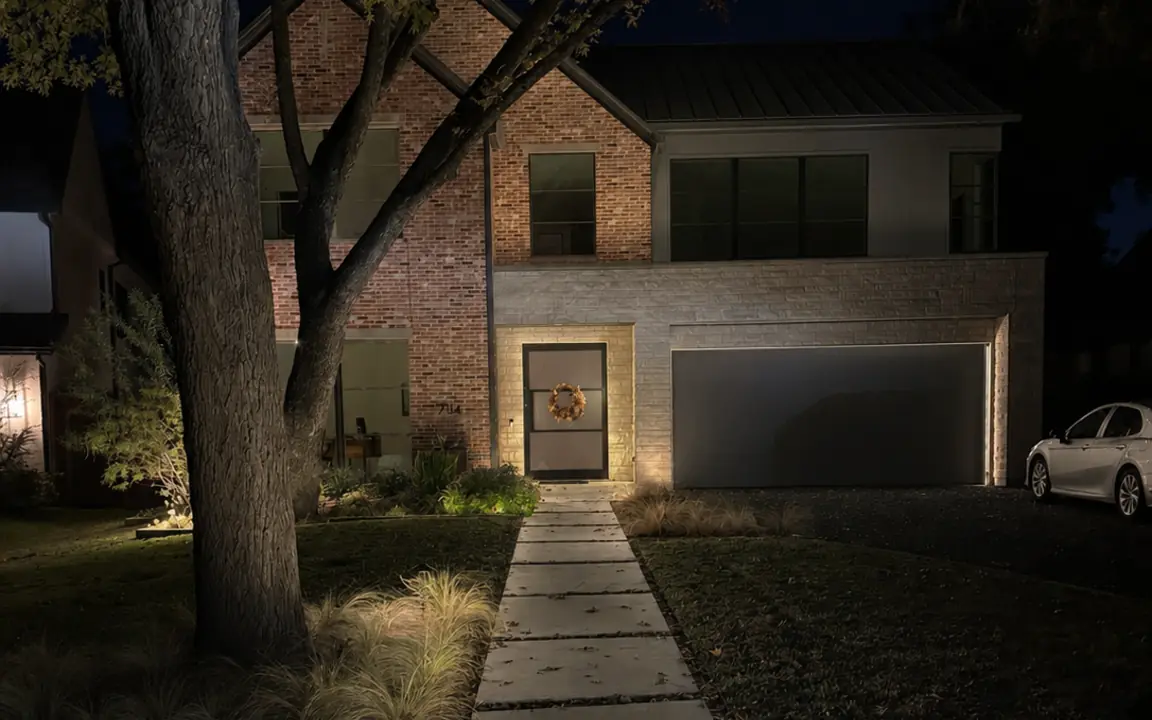 Before
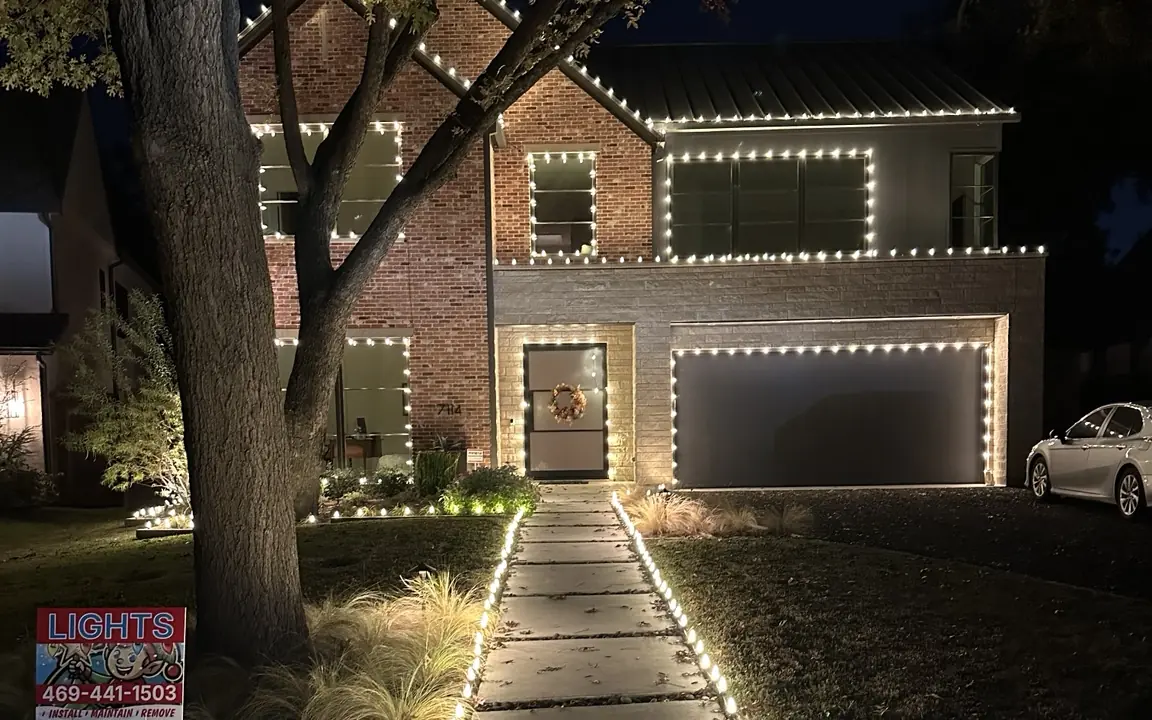 After
AfterLovers Lane Roofline
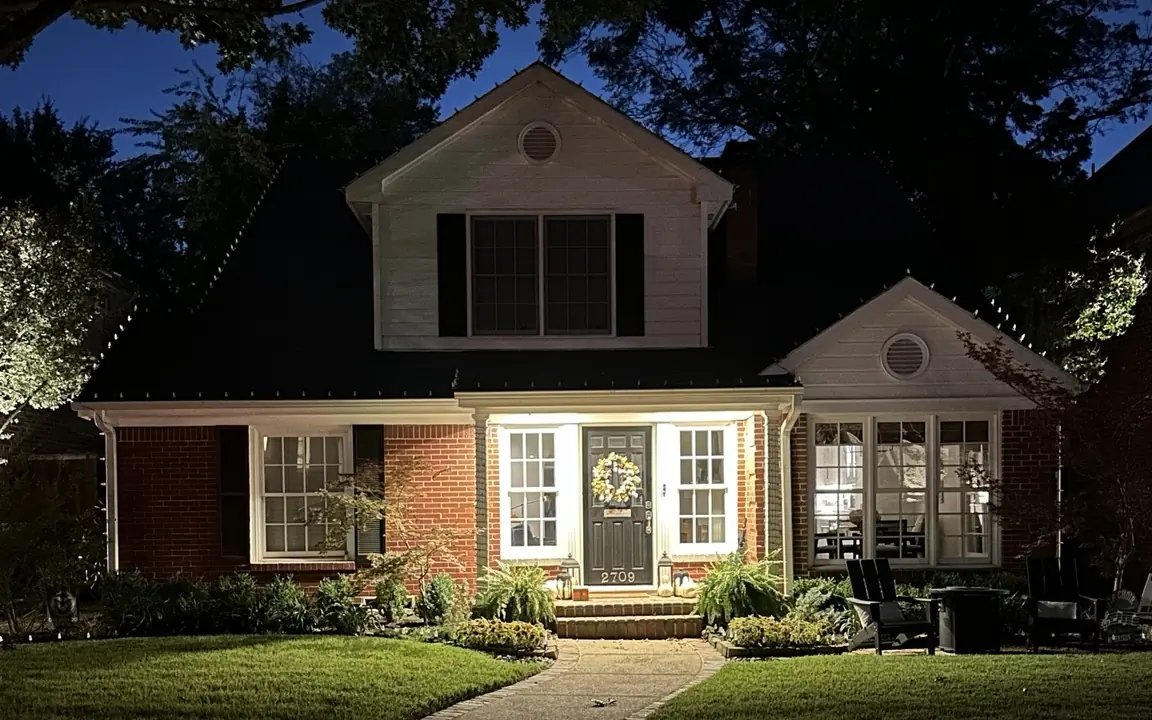 Before
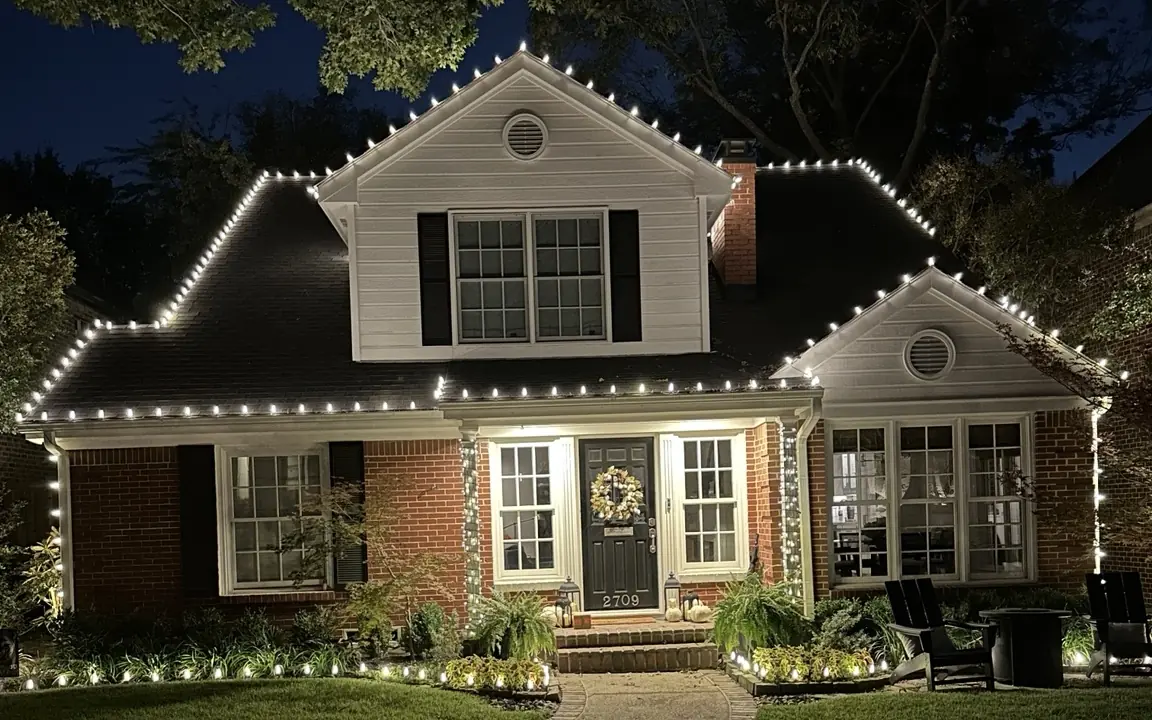 After
AfterGarland Home Transformation
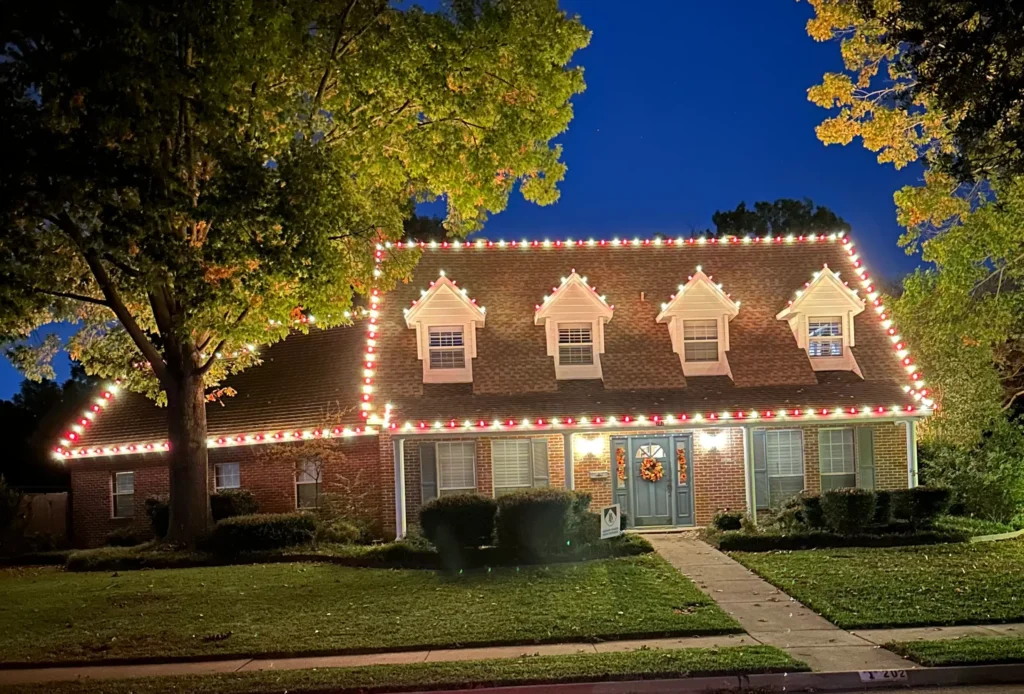 Before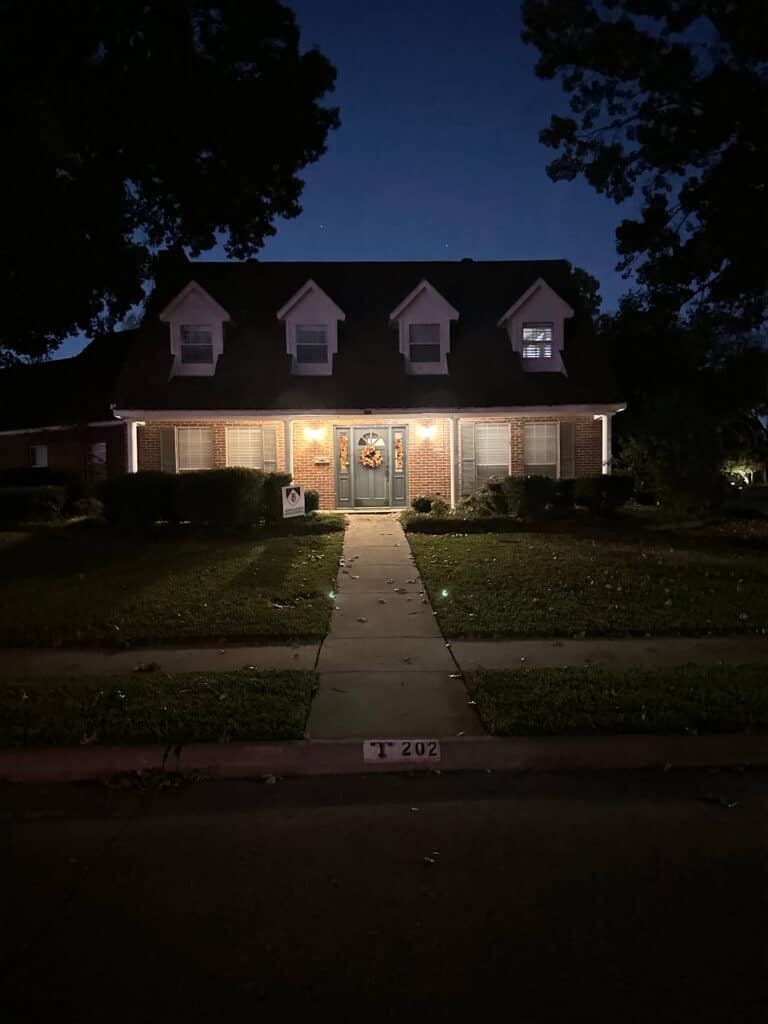
Build the approval, access and responsibility matrix
Every commercial or HOA project should name the decision-maker, on-site contact, after-hours contact, billing contact and person authorized to approve changes. The planning file should also record gates, loading zones, roof access, lift staging, security procedures, alarm considerations, irrigation schedules, landscape work, event dates and any time when installation activity must pause. Large properties may require coordination with facilities, management, security, landscape and event teams.
Insurance documents, vendor onboarding, contracts and additional property requirements should be requested early enough for review. No general website statement replaces the property’s written rules or the final service agreement. Elf’s uses the approved proposal to define included areas, exclusions, materials, customer responsibilities, service boundaries, price, changes, removal and storage so all parties can evaluate the same commitment.

Review products, power, surfaces and public movement
Outdoor seasonal lighting should be selected and installed as a complete system. Product ratings, wire condition, strain relief, overcurrent protection, connection locations, timers, mounting surfaces and exposure all matter. The U.S. Consumer Product Safety Commission identifies minimum wire size, sufficient strain relief and overcurrent protection as important observable characteristics for seasonal lighting products. The final plan must follow the selected product instructions and actual site conditions.
Public movement requires equal attention. Cords, decorations and equipment should not narrow normal walkways, interfere with doors, block emergency or accessible routes, create a trip exposure or compromise gates and signs. Trees, masonry, stucco, metal, trim and greenery need surface-appropriate attachment decisions. When a zone cannot be installed or serviced responsibly, the design should be revised before work begins.
Define installation, operating hours and seasonal support
The installation sequence should keep the property functioning. Crews may need to work by zone, around deliveries, outside customer peaks or in coordination with a site representative. The operating schedule should identify when the display turns on and off, who can change a timer or controller and how event exceptions are approved. A final walkthrough should confirm the visible design, approved controls, service channel and any condition that needs monitoring.
In-season support begins with clear reporting. The property contact should know how to identify the affected building or zone, send a useful photograph, describe recent weather or property activity and keep people away from damaged or energized components. The written agreement controls response expectations and coverage. Documented reporting helps the service team prepare for the correct location instead of searching a large property after arrival.
Treat takedown and inventory as part of the project
Removal should be planned before installation. The agreement needs a removal window, access contact, event constraints and a process for product condition, labeling, ownership, packing and storage. Community monuments, trees, rooflines, wreaths and garland should be recorded by zone so a repeat installation can be efficient and intentional. Any damaged or changed material should be documented instead of silently entering next season’s inventory.
After takedown, a short review can capture what worked, which areas received the most attention, what the property wants to change and whether the next season requires earlier approvals or additional custom décor. That continuity turns holiday lighting into a managed annual program. It also gives a McKinney HOA, business or property manager a cleaner budgeting and approval process for the following year.
Request a property-specific McKinney proposal
Start with the property address, current photographs, desired zones, primary audience, preferred colors, operating dates, approval contacts and any vendor requirements. For a community or multi-building site, include a simple plan showing entrances, amenities, buildings and priority areas. Elf’s can then organize the design conversation around the most valuable arrival and viewing moments.
The broad McKinney Christmas light installation page introduces local residential and service options. This page focuses specifically on businesses, HOAs and managed properties. Continue with the McKinney property-manager checklist or review the McKinney booking calendar before submitting the project through Trusty.
Trusty Saves Christmas
A familiar guide from the Elf’s character world
Original mascot artwork keeps the service experience connected to the Trusty Saves Christmas story while the page remains focused on practical property planning.


Meet the Owner
Efrain and the Elf’s Christmas Lights team
Efrain is introduced on the company’s About page as the owner of Elf’s Christmas Lights. This project is supported by a real local team, while Trusty and the other mascot characters give the customer experience its memorable holiday personality.
Meet the TeamFrequently Asked Questions
What McKinney commercial properties can request holiday lighting?
Elf’s can review retail, restaurant, office, medical, multifamily, mixed-use, venue, community and HOA properties. Final availability and scope depend on the site, schedule, access and written proposal.
Can an HOA approve only the entrance and clubhouse?
Yes. The proposal can be limited to selected common areas such as monuments, gates, walls, clubhouses, trees and approved paths.
How is maintenance handled for a large property?
The agreement should identify the reporting contact, property zones, service channel, access rules, coverage boundaries and response process.
Are takedown and storage automatically included?
Only the written proposal controls. Confirm the removal window, product ownership, labeling, packing, storage and next-season responsibilities.
How early should a commercial or HOA project begin?
Begin before peak installation periods when the project requires approvals, vendor onboarding, custom décor, multiple contacts, lifts, events or several buildings.
Helpful Resources
Build your display plan with Trusty the Elf
Use the calculator to organize your property, preferred lighting style, measurements, timing, and contact details for the team’s final review.

Elf's Christmas Lights
Trusty's Instant Christmas Light Estimate
Tell Trusty about your property and holiday display. You will receive a professional planning estimate before our team confirms the final design and price.
- 1Property
- 2Display
- 3Style
- 4Estimate
Let's start with the property so I can guide you toward the right holiday display.
Plan your McKinney commercial or HOA display
Send the property address, approved zones, current photographs, schedule and decision-maker information. The Elf’s team will review the complete site before confirming a proposal.