 Skip to content

LED vs. Incandescent Christmas Lights for Texas Homes
If you are researching LED vs incandescent Christmas lights, this guide explains the design, installation, service, and planning details that matter before a final proposal. LED and incandescent Christmas lights can both create a familiar holiday look, but they differ in energy use, heat, service life, maintenance, controls, color behavior, and system planning. Here is what Texas property owners should understand before choosing.

LED vs incandescent Christmas lights: what to expect
A reliable plan for LED vs incandescent Christmas lights should include a property-specific design, a clearly written scope, suitable materials, professional installation, responsive seasonal support, and an agreed takedown plan.
The practical difference between the technologies
Incandescent bulbs create light by heating a filament. LEDs create light through semiconductor components and generally use less energy for comparable lighting. The U.S. Department of Energy explains that modern LEDs can use up to 90% less energy and last far longer than incandescent bulbs, although actual performance depends on product quality, operating conditions, electronics, and the complete system.
For a holiday installation company, the decision is not only about a single bulb. Voltage, wire type, sockets, color consistency, replacement inventory, dimming, controllers, strand limits, power supplies, weather exposure, and serviceability all matter. Mixing products without a system plan can create mismatched color, brightness, connection, or control problems.
How LED and incandescent lights compare
Energy and heat
LED systems generally use substantially less energy and release less heat than incandescent lighting, supporting larger displays with thoughtful circuit planning.
Life and maintenance
Quality LEDs can last much longer, but drivers, connections, color shift, moisture, handling, and product quality still affect reliability.
Look and control
Incandescent lights have a familiar filament glow. LEDs offer many whites, colors, shapes, efficiencies, and programmable RGB options.

Why “warm white” is not one universal color
Different manufacturers and product lines can produce noticeably different whites. One warm-white bulb may look amber, another neutral, and another slightly green or blue when compared side by side. Replacement bulbs should match the approved product line and color as closely as possible. A professional mockup or sample is valuable on high-end projects where consistency matters.
The same principle applies to red, green, blue, and multicolor palettes. Decide whether the goal is classic contrast, saturated color, subtle accents, or animated scenes. Then choose a system that can produce that result without relying on incompatible components.
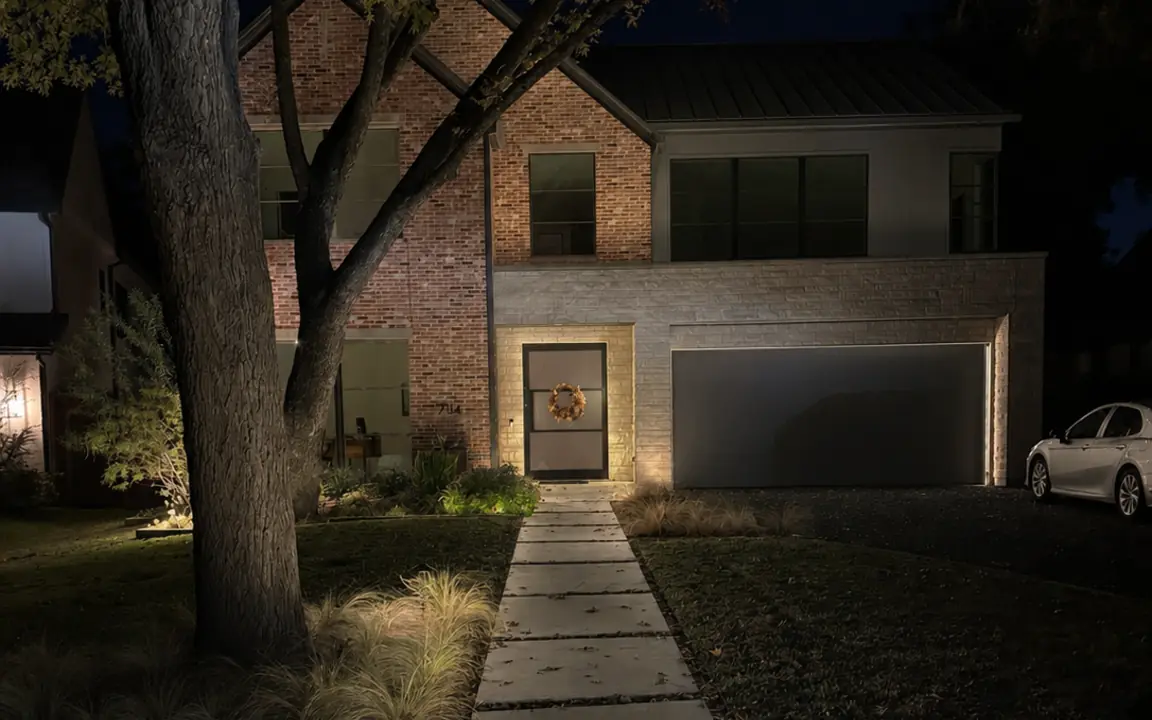
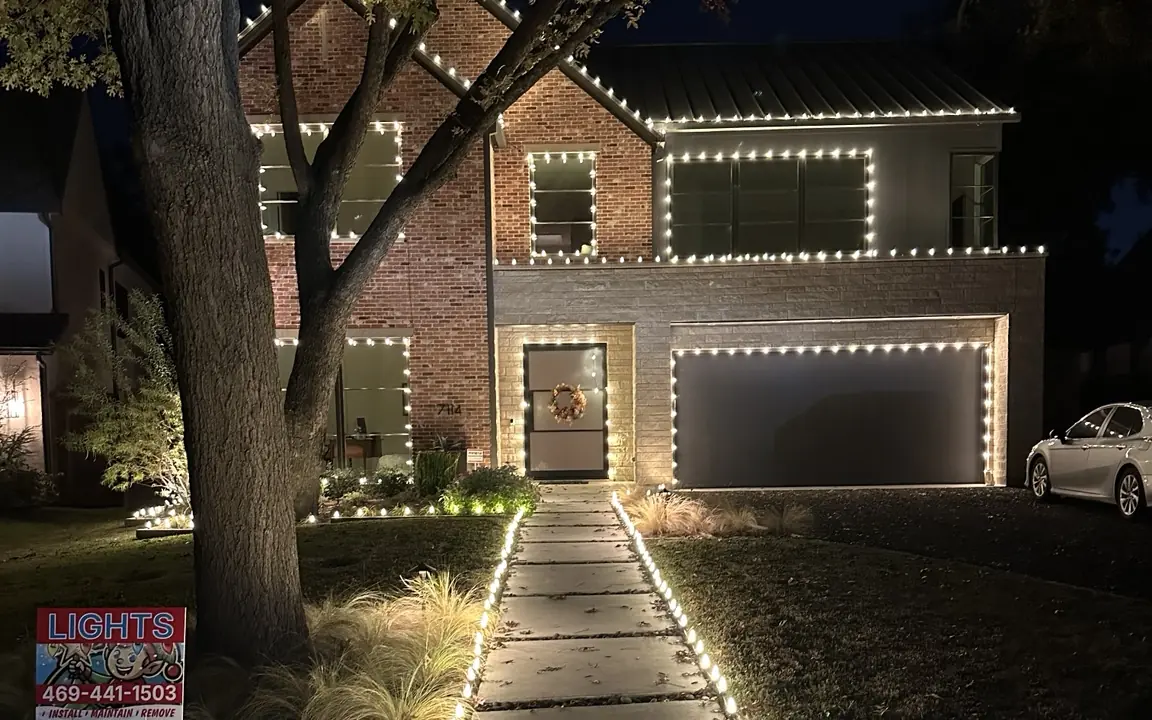
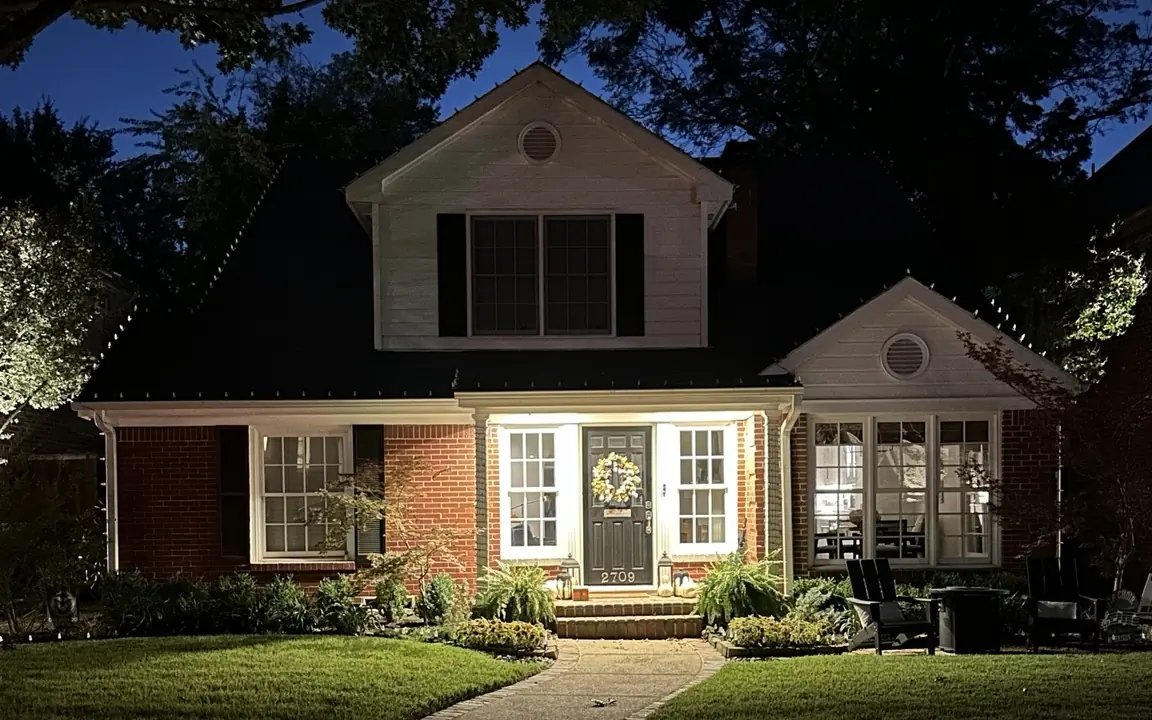
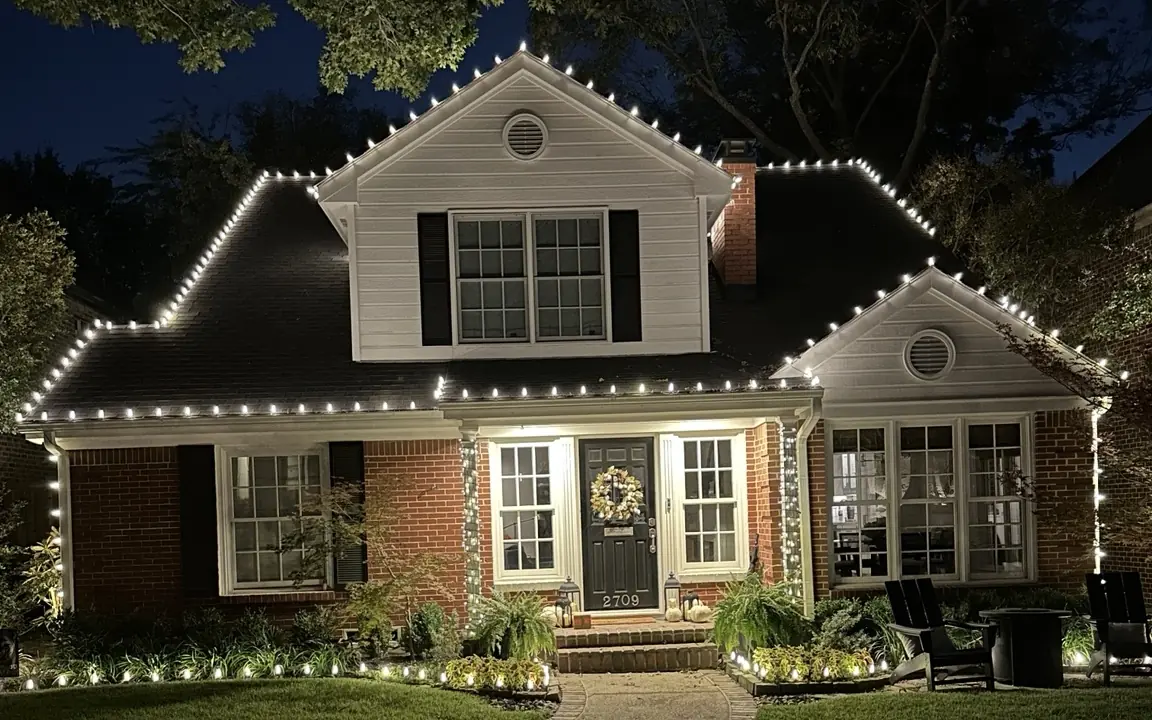
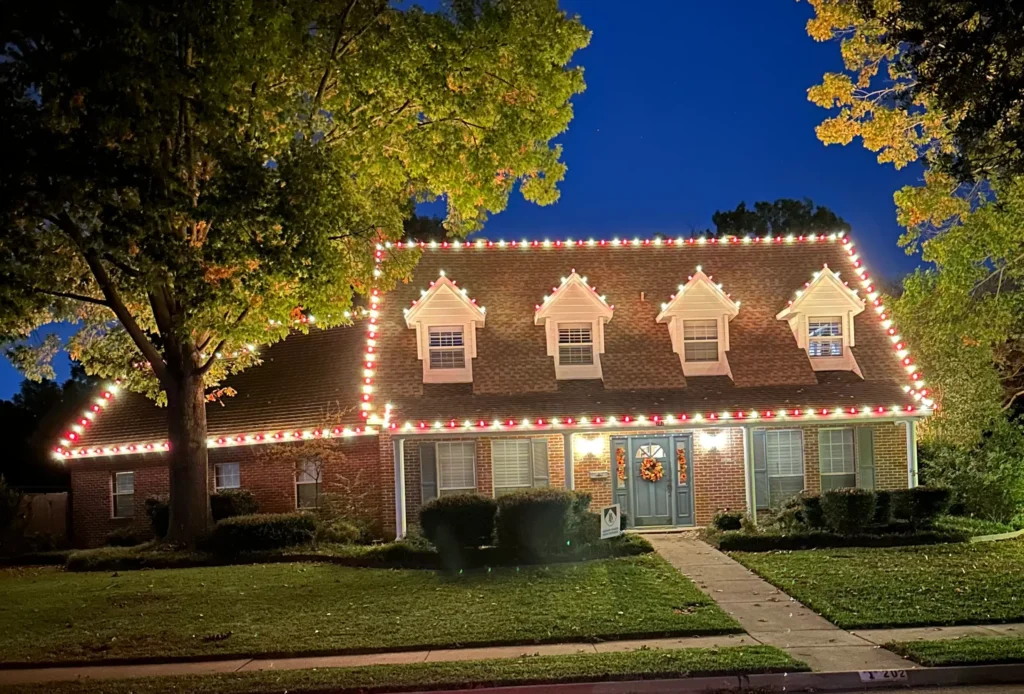
See the house before and after professional Christmas lighting
Drag the control or use the arrow keys to compare the same home before and after a professionally planned display.
Lakewood Walkway & Architecture
 Before
 After
AfterLovers Lane Roofline
 Before
 After
AfterGarland Home Transformation
 Before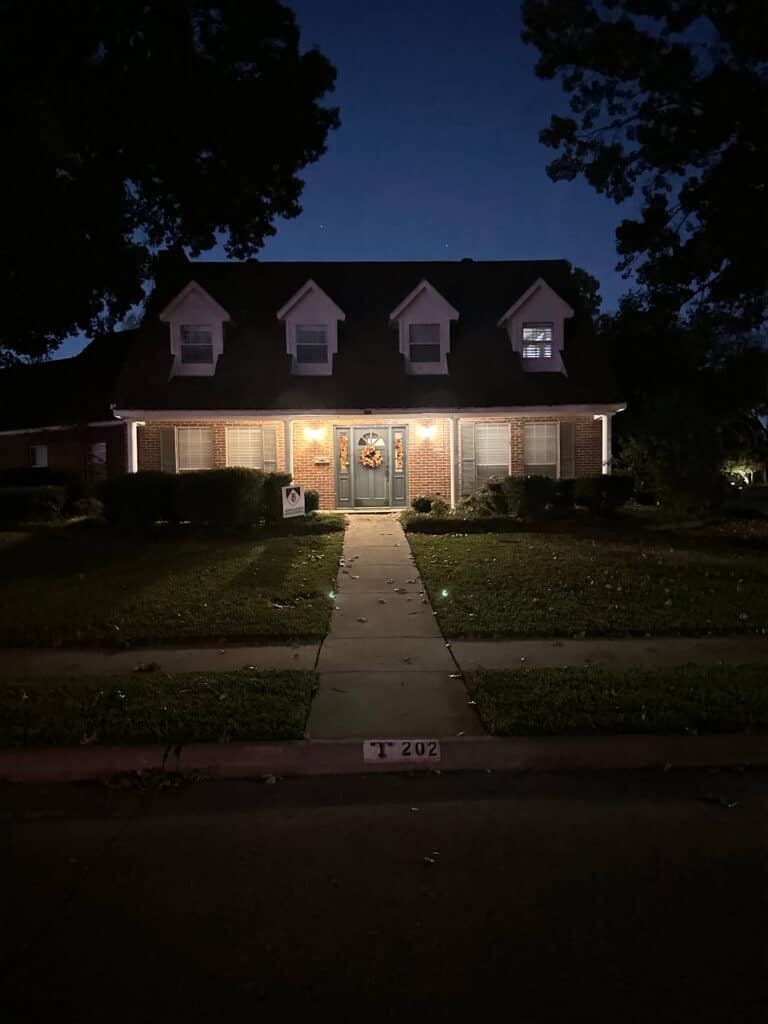
LED considerations for DFW weather and service
A lower-energy bulb does not make a connection waterproof or a mounting method windproof. Outdoor-rated products, manufacturer instructions, protected connection placement, suitable cords and controls, secure mounting, drainage, and maintenance access remain important. Temperature shifts, rain, wind, landscaping activity, animals, and outlet trips can still affect a display.
For most professional residential and commercial applications, LED systems offer useful efficiency, color, control, and maintenance advantages. The final choice should follow the design, budget, desired appearance, existing inventory, service model, and approved product specifications.

Choose the system, not only the bulb
Ask what product family will be used, whether the lights are outdoor-rated, how color consistency is managed, how replacements are handled, what controls are included, and whether the system is intended for static, dimmed, RGB, or synchronized use. The RGB and synchronized lighting guide explains the additional planning needed for programmable displays.

Frequently Asked Questions
Do LED Christmas lights use less electricity?
Generally, yes. The U.S. Department of Energy reports substantial energy savings for LED lighting compared with incandescent technology, but actual use depends on the products, quantity, controls, and operating hours.
Do LEDs last forever?
No. LEDs can have long useful lives, but electronics, connections, color shift, moisture, heat, handling, product quality, and operating conditions still affect reliability.
Are incandescent lights warmer in color?
Incandescent filaments have a familiar warm appearance. LEDs can closely imitate it, but white tone varies by manufacturer and product line, so samples matter.
Can LED and incandescent lights be mixed?
Do not combine systems casually. Electrical characteristics, controls, color, brightness, connectors, and manufacturer instructions must be reviewed.
Helpful Resources
Build your display plan with Trusty the Elf
Use the calculator to organize your property, preferred lighting style, measurements, timing, and contact details for the team’s final review.

Elf's Christmas Lights
Trusty's Instant Christmas Light Estimate
Tell Trusty about your property and holiday display. You will receive a professional planning estimate before our team confirms the final design and price.
- 1Property
- 2Display
- 3Style
- 4Estimate
Let's start with the property so I can guide you toward the right holiday display.
Ready to create your Christmas lighting plan?
Tell Trusty the Elf what you want to decorate. Our team will review the property, design, access, materials, and schedule before confirming your final proposal.
Expanded Planning Coverage
More ways to plan LED vs. Incandescent Christmas Lights for Texas Homes
Explore the related property, design, service and decision questions below. Each topic stays on this page because it supports the same primary search intent and customer next step.
Products
LED Christmas light energy use
Treat this as a distinct planning question and connect it to verified scope, property conditions, useful examples and a clear next step.
Scope reminder: Final availability, products, timing, service coverage and price are confirmed only through the property-specific written proposal.