 Skip to content

Christmas Light Safety: Professional Installation vs. DIY
If you are researching christmas light installation safety, this guide explains the design, installation, service, and planning details that matter before a final proposal. Holiday lighting should add enjoyment—not create preventable ladder, electrical, fire, or property hazards. This guide explains the planning differences between a professional installation and a do-it-yourself project.

Christmas light installation safety: what to expect
A reliable plan for christmas light installation safety should include a property-specific design, a clearly written scope, suitable materials, professional installation, responsive seasonal support, and an agreed takedown plan.
Why holiday decorating deserves a safety plan
The U.S. Consumer Product Safety Commission advises consumers to follow ladder warnings, inspect light sets for damaged sockets or exposed wiring, use suitable extension cords, and avoid overloading outlets. The National Fire Protection Association also recommends using lights for their listed indoor or outdoor purpose, replacing worn cords or loose connections, and using clips rather than nails so cords are not damaged.
Those recommendations apply whether a homeowner installs the display or hires a professional. Hiring a company does not eliminate the need to verify current insurance, scope, materials, access, service procedures, and the property’s electrical limitations. A professional advantage comes from having a repeatable planning process, trained crews, appropriate equipment, documented materials, and an agreed maintenance route—not from the word professional by itself.
Common DIY pressure points
Ladders and roof access
Uneven ground, overreaching, carrying materials, steep pitches, wet surfaces, and working alone can turn a short task into a serious risk.
Products and connections
Indoor-only lights, damaged cords, loose connections, incorrect strand limits, overloaded outlets, and exposed connection points require attention.
Mounting and removal
Improvised nails, staples, adhesives, or force can damage cords and surfaces. Removal can create the same access risks as installation.
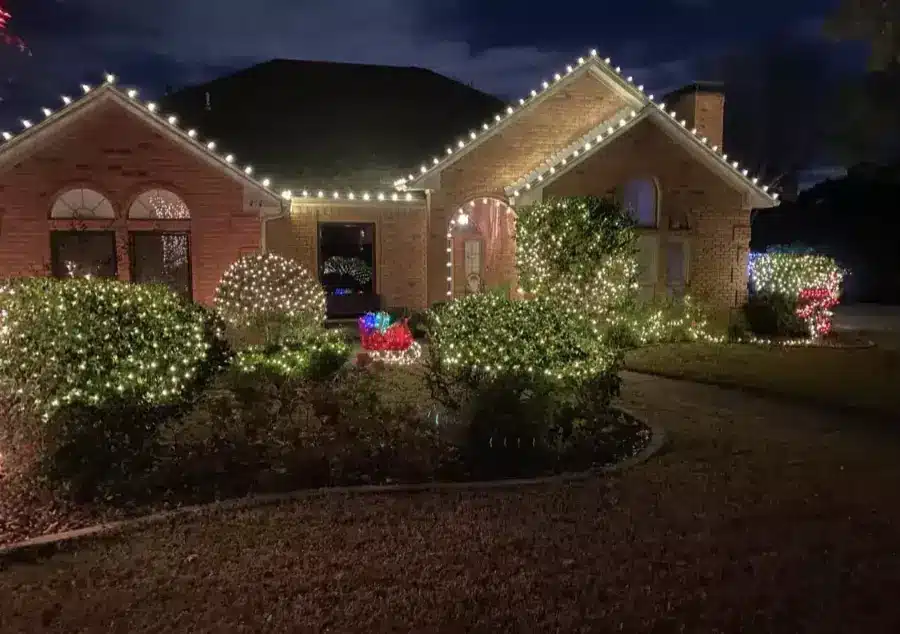
What a professional planning conversation should cover
Review the intended surfaces, roof height and pitch, ladder or lift placement, landscaping, gates, pets, pedestrian routes, outlets, GFCI protection, controls, extension-cord ratings, weather exposure, and maintenance access. Confirm that products are intended for the environment and follow manufacturer limitations. The installer should be able to explain where controls are located and how to report a problem without asking the customer to climb.
Commercial and HOA properties need additional coordination around public areas, doors, windows, egress, deliveries, operating hours, tenant or resident communication, and authorized service access. Property management may also have vendor-compliance requirements that must be satisfied before work begins.
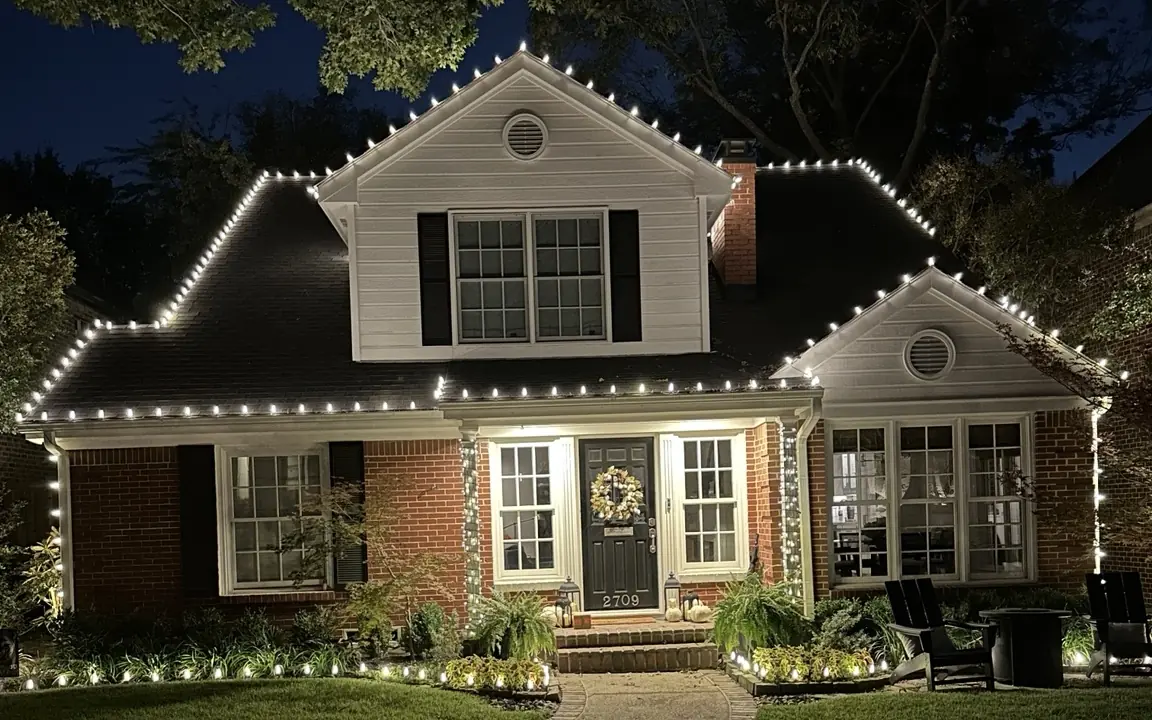
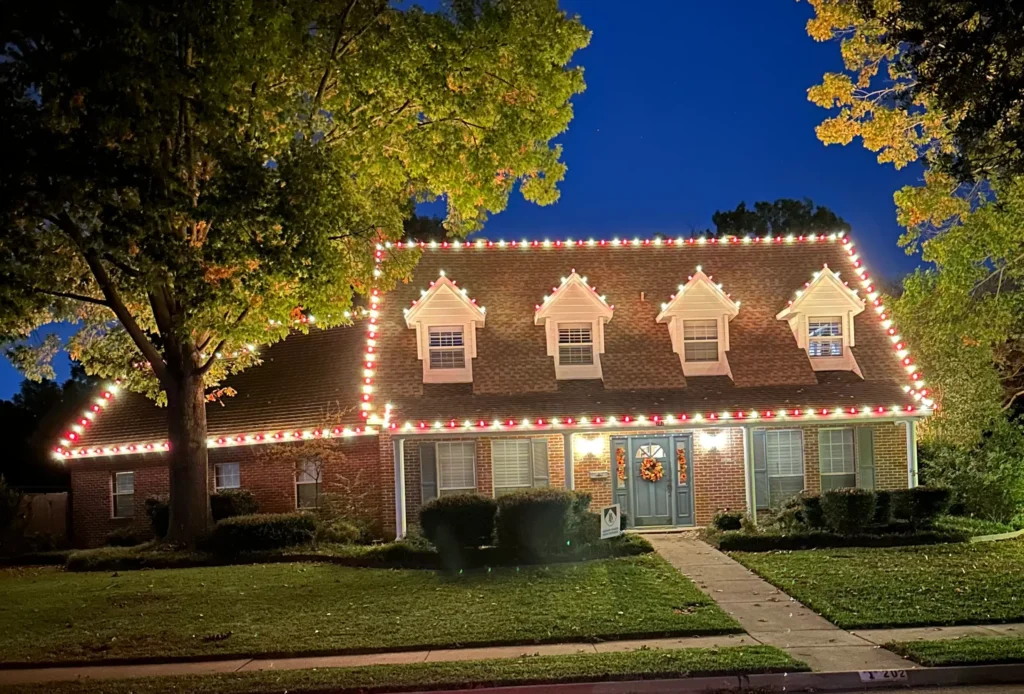
See the house before and after professional Christmas lighting
Drag the control or use the arrow keys to compare the same home before and after a professionally planned display.
Lakewood Walkway & Architecture
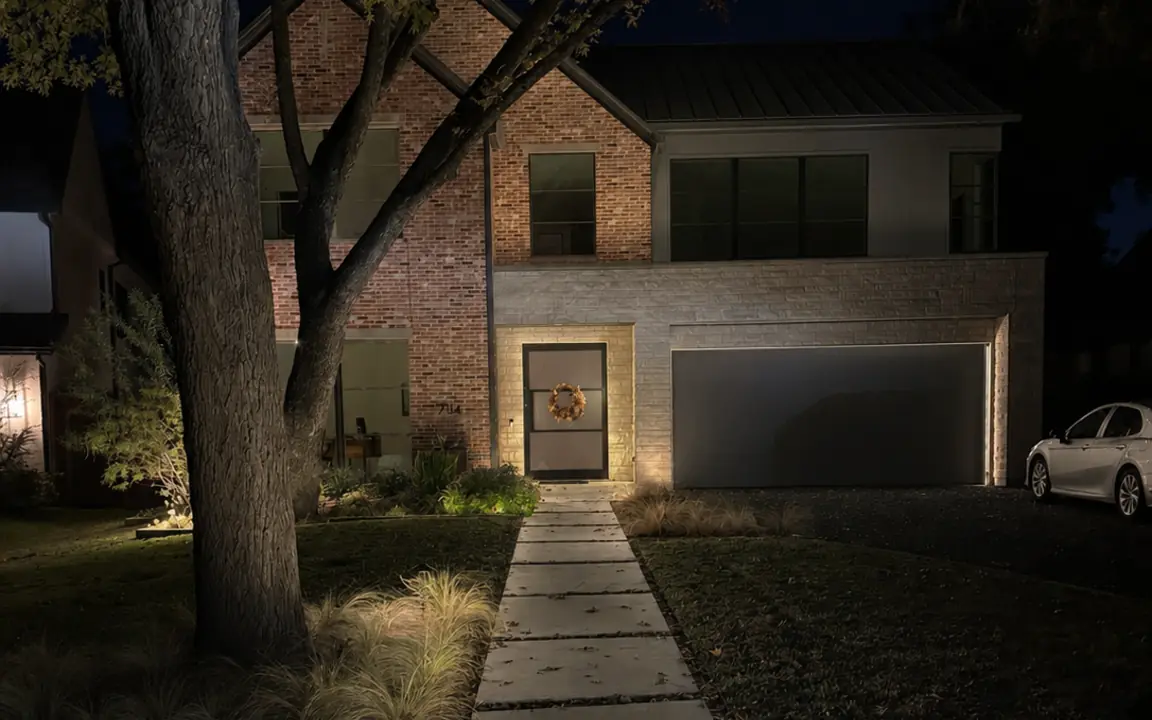 Before
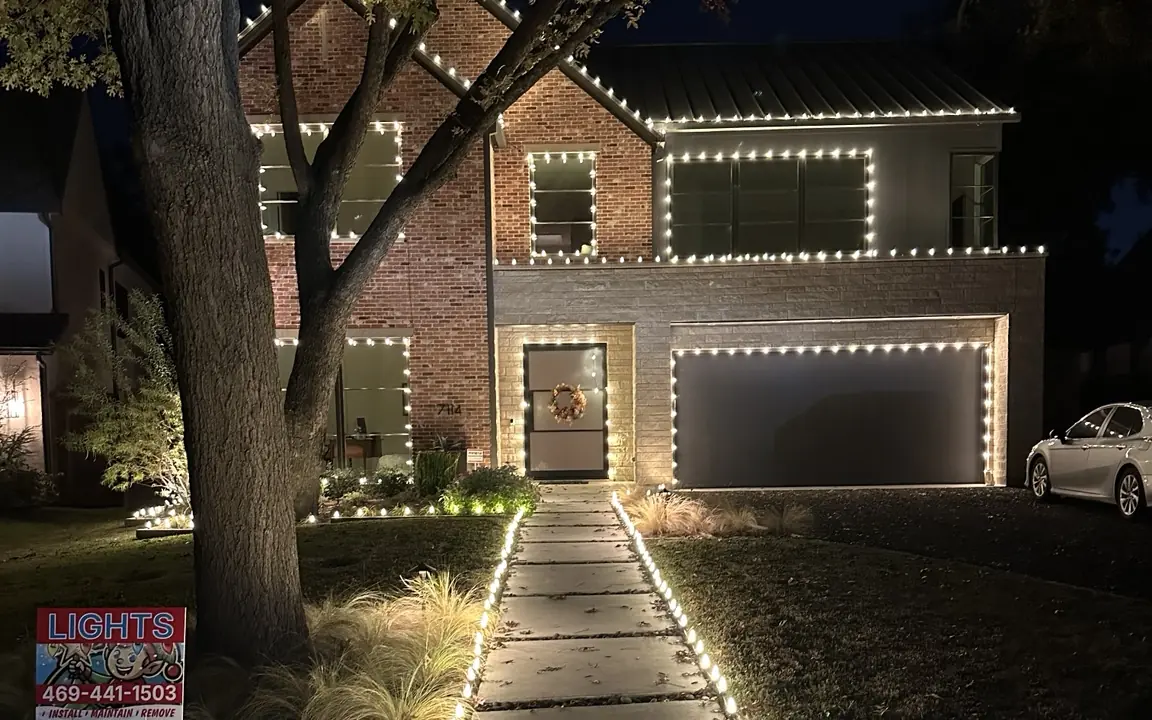 After
AfterLovers Lane Roofline
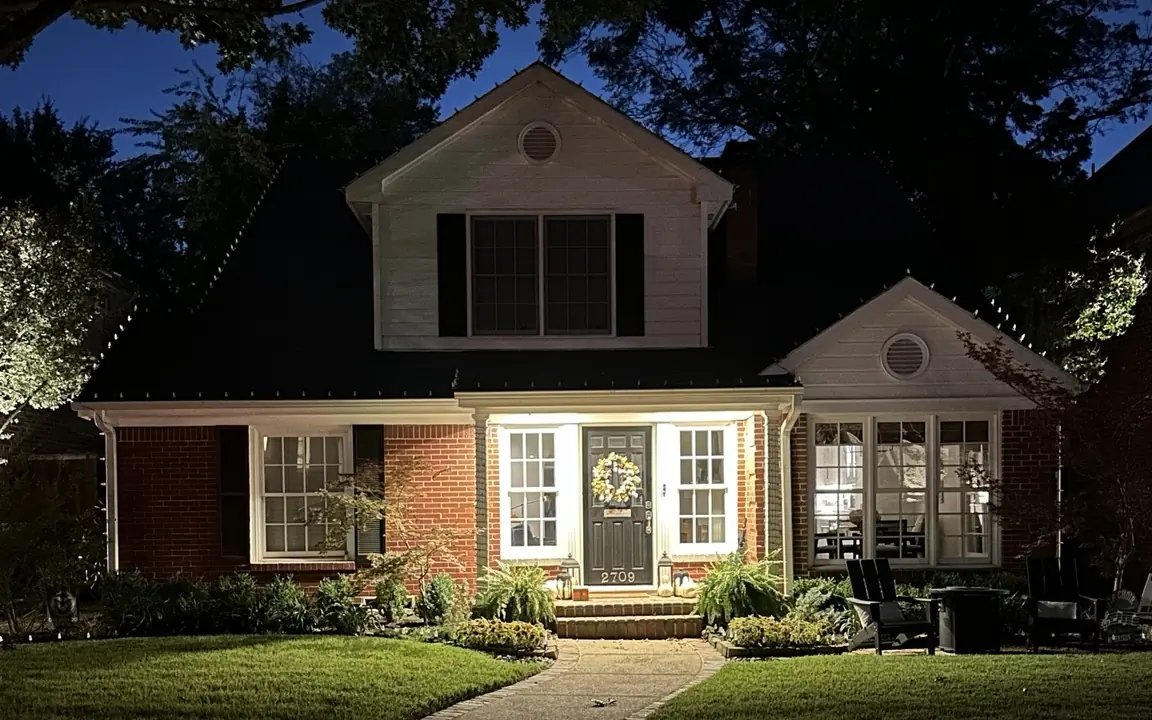 Before
 After
AfterGarland Home Transformation
 Before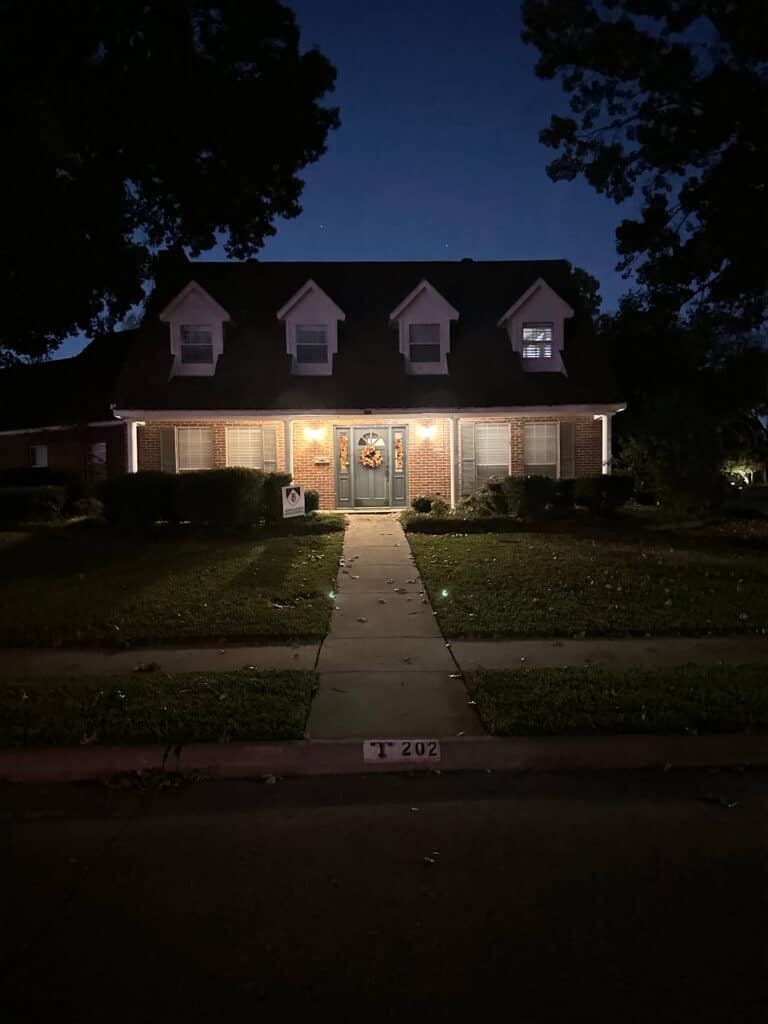
Safe use during the season
Do not attempt an elevated repair while the display is energized. Keep the control location accessible, follow the agreed operating schedule, and report damaged cords, repeated tripping, loose materials, or weather-related changes. Never modify the professional installation without discussing the change, because added strands or relocated connections can affect the original plan.
Holiday lighting is only one part of seasonal safety. Keep decorations away from heat sources and exits, follow manufacturer instructions, and review the current guidance from CPSC and NFPA linked below.

How to decide between DIY and professional service
DIY may be reasonable for low, accessible features when the homeowner has suitable products, equipment, time, and confidence. Professional service becomes more valuable as height, roof complexity, tree work, display size, public exposure, programming, maintenance expectations, and removal requirements increase. The right choice is the one that treats safety, property protection, time, and total service—not just installation day—as part of the decision.

Frequently Asked Questions
Should outdoor Christmas lights be plugged into any available outlet?
No. Products, cords, connections, controls, circuit capacity, outlet protection, and manufacturer instructions must be appropriate for the intended outdoor use.
Are nails or staples safe for hanging lights?
NFPA recommends clips rather than nails so cords are not damaged. Use suitable mounting methods for the product and surface.
Can I fix a roofline outage myself after professional installation?
Do not perform elevated or energized repairs. Follow the maintenance process in the service agreement and contact the installer.
Does hiring an installer guarantee safety?
No service is risk-free. Verify the company, current documentation, scope, materials, methods, access plan, and maintenance process before approval.
Helpful Resources
Build your display plan with Trusty the Elf
Use the calculator to organize your property, preferred lighting style, measurements, timing, and contact details for the team’s final review.

Elf's Christmas Lights
Trusty's Instant Christmas Light Estimate
Tell Trusty about your property and holiday display. You will receive a professional planning estimate before our team confirms the final design and price.
- 1Property
- 2Display
- 3Style
- 4Estimate
Let's start with the property so I can guide you toward the right holiday display.
Ready to create your Christmas lighting plan?
Tell Trusty the Elf what you want to decorate. Our team will review the property, design, access, materials, and schedule before confirming your final proposal.
Expanded Planning Coverage
More ways to plan Christmas Light Safety: Professional Installation vs. DIY
Explore the related property, design, service and decision questions below. Each topic stays on this page because it supports the same primary search intent and customer next step.
Safety
Christmas light installation safety for tall roofs
Treat this as a distinct planning question and connect it to verified scope, property conditions, useful examples and a clear next step.
Scope reminder: Final availability, products, timing, service coverage and price are confirmed only through the property-specific written proposal.